
Discover the best Trustly casinos UK 2026 with top sites for fast payments, offering instant bank transfers and reliable payouts.
The definitive guide to the best real money online casinos UK 2026 helps you choose safe and rewarding platforms for real-money gaming.
Explore the best no KYC casinos UK 2026 with anonymous gambling sites that prioritize your privacy and fast withdrawals.
Check out the definitive 2026 guide to RTP mechanics and real money play for the best online slots UK.
Our guide to the best Paysafecard casino UK 2026 features top UK casinos that accept Paysafecard for secure prepaid deposits.
Read our definitive guide to the best real money online casinos UK 2026 and find the most trustworthy platforms for UK players.
Discover the best Skrill casino UK sites for fast withdrawals and fair play with our comprehensive guide to e-wallet gaming.
The definitive offshore gambling guide to the best UK casinos not on GamStop helps you find more flexible alternatives.
Our guide to low deposit casinos UK features the best £1, £5, and £10 minimum deposit sites for budget-conscious players.
Learn how to claim a free bonus on registration no deposit UK 2026 with our definitive guide to these risk-free offers.
Our definitive UK blueprint for free spins no deposit not on GamStop 2026 helps you find the best non-GamStop offers.
Discover the real deal behind those free offers with our guide to free spins no deposit UK 2026.
Our free spins no wagering no deposit casino UK guide helps you keep what you win without wagering requirements.
Our guide to 20, 25, 50, 100, 200 free spins no deposit UK 2026 helps you find the most generous no-deposit spin offers.
Our definitive Bitcoin casino guide to the best crypto casino UK 2026 helps you find secure, fast-paying platforms.
CIPP System
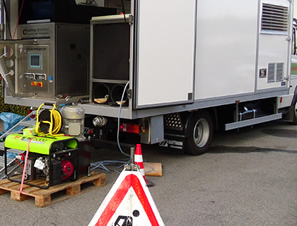 A cured-in-place pipe (CIPP) is one of several trenchless rehabilitation methods used to repair existing pipelines. CIPP is a jointless, seamless, pipe-within-a-pipe with the capability to rehabilitate pipes ranging in diameter from 0.1–2.8 meter (4″–110″). As one of the most widely used rehabilitation methods CIPP has application in water, sewer, gas, and chemical pipelines for both gravity and pressure lines (ref)
The CIPP Process
A resin-saturated felt tube made of polyester (or vinyl ester) , fibreglass cloth or a number of other materials suitable for resin impregnation, is inverted or pulled into a damaged pipe. It is usually done from 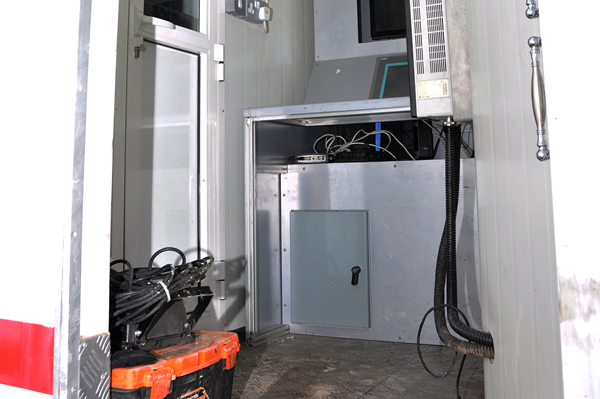 the upstream access point (manhole or excavation). It is possible to invert the liner upstream (e.g. from the downstream access point) but this carries greater risk. It is possible to install a liner from the downstream access point, upstream to a blind end however this carries the highest risk of all the CIPP installation methods. Little to no digging is involved in this trenchless process, making for a potentially more cost-effective and less disruptive method than traditional “dig and replace” pipe repair methods. The liner can be inverted using water or air pressure. The pressure required for inversion can be generated using pressure vessels, scaffolds or a “Chip unit”. Hot water, UV light, ambient cured or steam is used to cure the resin and form a tight-fitting, joint less and corrosion-resistant replacement pipe. Service laterals are restored internally with robotically controlled cutting devices in the larger diameter pipe. Smaller diameters (100mm) can be opened remotely however they are often reinstated by excavation. The service lateral connection can be sealed with specially designed CIPP materials. The resin used is typically polyester but vinyl ester is also used. Since all resins shrink and it is impossible to bond to a sewer that has fats, oils, and grease an annular space exists between the new CIPP liner and the host pipe. The annular space exists in all installations just some are larger than others. The most effective way to prevent water from tracking in the annular space and entering back into the waste stream is from a water swelling material (hydrophilic) placed at the ends of the host pipe and at the lateral connections. The rehabilitated pipe is then inspected by closed-circuit television (CCTV). CIPP is considered a trenchless technology.
Advantages
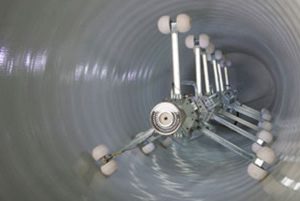
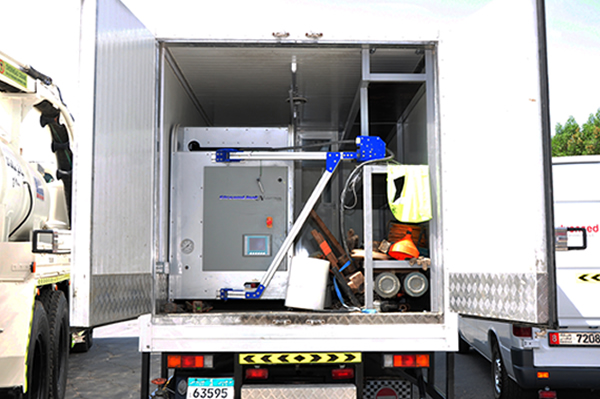 As a trenchless technology, CIPP does not require excavation to rehabilitate a pipeline that is either leaking or structurally unsound. Depending upon design considerations an excavation may be made, but the liner is often installed through a
manhole or other existing access point. Liner is installed as it is wet out on site in these instances. In the case of sewer lines, lateral connections are also restored without excavation via a remote controlled device that drills a hole in the liner at the point of the lateral connection. If larger than 24″ and it is safe to do so someone will reinstate laterals by hand. CIPP has a smooth interior and no joints. While CIPP can repair a pipe with bends, special design considerations must be taken into account to prevent wrinkling and stretching. CIPP can effectively reduce infiltration and leaks in pipeline systems without digging.
CIPP systems create a close-fit `pipe-within-a-pipe’ which has quantifiable structural strength and can be designed to suit various loading conditions. As well as minimizing bore reduction, an inherent advantage of cured-in-place liners is their ability to conform to almost any shape of pipe, making them suitable for relining non-circular cross-sections.
In the systems offered by ADPS, the common feature is the use of a fabric tube impregnated with polyester, vinyl ester or epoxy resin. The tube is inserted into the existing pipeline and inflated against the pipe wall. It is then cured by re-circulating hot water or steam, or by applying ultra-violet light.
The several systems offered by ADPS have different characteristics which make them particularly suitable for different uses.